How to Choose a Healthcare Software Development Company
Most healthcare software projects fail not because of bad code, but because the development team did not understand clinical workflows, HIPAA architecture, or EMR integration before they started. Here is the evaluation framework we recommend to every founder before signing a contract.

Choosing a healthcare software development company is one of the most consequential decisions a digital health founder makes. The wrong choice does not just cost money — it can produce software that is clinically unsafe, legally non-compliant, or simply impossible to maintain. The right team will understand what an ADT event is, why a BAA matters before the first line of code is written, and how to design an audit log schema that holds up under a HIPAA Security Rule assessment.
This guide covers the seven criteria that separate development teams who genuinely understand healthcare from those who claim to. It also covers the questions to ask, the red flags to watch for, and the engagement models that work best for different types of healthcare projects.
1. Can they describe their HIPAA compliance approach in technical detail?
The first filter is not a portfolio review. It is a technical conversation about HIPAA. Ask any candidate team to walk you through how they implement the four HIPAA Security Rule safeguard categories in a production system. If they cannot answer without looking at a checklist, or if their answer is "we follow best practices," the conversation is over.
The specific answers you want to hear:
- Access controls: Role-based access control at the API layer, not just the UI. Minimum necessary standard enforced at the query level. Automatic session timeouts on inactivity.
- Audit controls: Immutable audit logs on every read, write, update, and delete of PHI. Logs tied to authenticated user identity, not just IP address. Six-year retention minimum. Separate log storage from application storage so a compromised application cannot alter its own audit trail.
- Integrity controls: Checksums or cryptographic verification on critical data. Protection against unauthorized alteration in transit and at rest.
- Transmission security: TLS 1.2 or higher for all data in transit. No PHI in URLs, query strings, or unencrypted log files.
Ask specifically about encryption at rest. The answer should be AES-256. Ask about their approach to PHI in error tracking tools — Sentry, Datadog, and similar platforms can inadvertently capture PHI in stack traces unless explicitly configured to scrub it. A team that has never thought about this has not shipped a HIPAA-compliant production system.
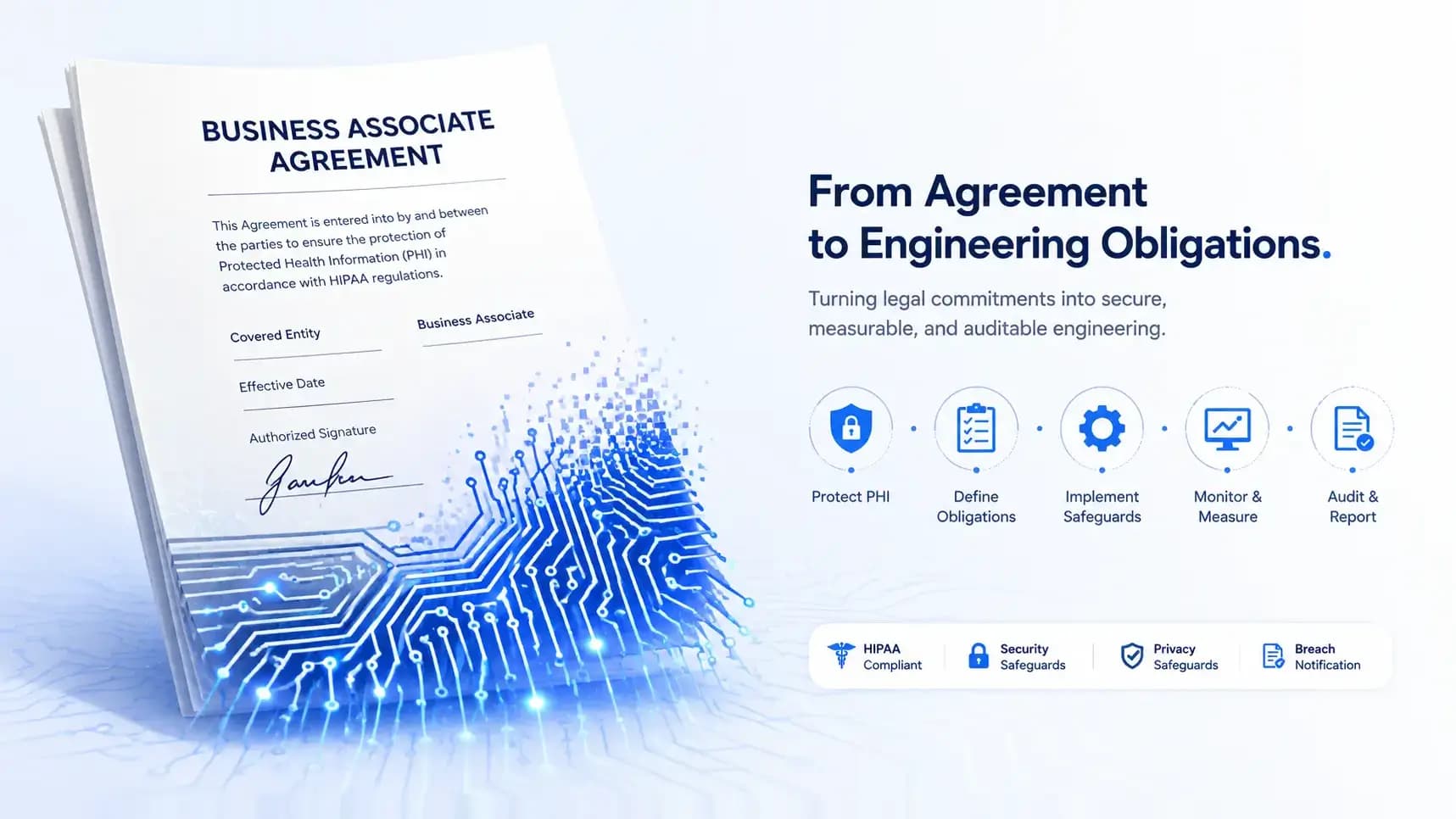
Ask whether they sign Business Associate Agreements as standard. The answer must be yes. Any team that is unclear on when a BAA is required is telling you something important about their healthcare experience.

2. Have they integrated with the EMR systems your users actually use?
EMR integration is one of the highest-risk parts of any healthcare software project. HCHB, Epic, Cerner, athenahealth, and PointClickCare each have their own API characteristics, authentication models, data formats, and provisioning timelines. Teams that have not done it before routinely underestimate the complexity by a factor of three to five.
The questions to ask:
- Have they integrated with your specific EMR in production — not in a sandbox?
- How long did the sandbox provisioning process take, and what documentation did they need to provide?
- Did they implement bidirectional integration (read and write) or read-only?
- How do they handle ADT events — admit, transfer, discharge — and what is their approach to message ordering and deduplication?
- What is their retry strategy for failed HL7 message delivery?
For home health and hospice specifically, HCHB integration is the most common requirement. HCHB's API provisioning process takes four to six weeks and requires your team to complete a formal sandbox application. If a development company tells you they can start HCHB integration immediately, they either have an existing sandbox relationship or they are underestimating the timeline.
If you are building a telehealth platform, ask about their experience with FHIR R4 specifically. The 21st Century Cures Act mandates FHIR API access for most EHR systems, making it the dominant standard for new integrations. Teams building on FHIR versus legacy HL7 v2 are working with fundamentally different tooling and timelines.

3. Do they have production healthcare software running with real patients?
There is a significant difference between a development company that has delivered HIPAA-compliant systems in a production environment used by real clinicians and patients, and one that has delivered a healthcare application that passed a compliance review. The first category understands what happens when a clinician cannot access a patient record at 2am. The second category understands what is required to pass an audit.
What to look for in their portfolio:
- Named software (or clearly described software) that is in production use today
- Specific clinical workflows they have built: care coordination, care plans, IDG meetings, credentialing, telehealth visits, prescription management
- Quantified outcomes: clinician time savings, reduction in preventable readmissions, reduction in administrative burden
- Evidence of ongoing maintenance — healthcare software that was shipped and then abandoned is a red flag, because production healthcare systems require ongoing compliance monitoring and security patching
Case studies should include enough technical detail to be verifiable. "We built a healthcare app" is not a case study. "We built a HIPAA-compliant care coordination platform with bidirectional HCHB integration, native iOS and Android apps for field clinicians, and IDG meeting support — and it reduced preventable hospital readmissions by 30 to 40 percent" is a case study that tells you something meaningful.
4. What is their approach to healthcare AI, and do they understand the clinical safety implications?
AI is being added to healthcare software at a pace that significantly outstrips the industry's understanding of the clinical safety risks. If you are building any AI-powered feature that could influence clinical decisions, the development team's approach to AI safety matters as much as their approach to HIPAA compliance.
The risks are specific:
- Hallucination in clinical contexts: An AI assistant that confidently provides incorrect medication dosages or contradicts a care plan is not a product quality problem. It is a patient safety problem.
- Training data contamination: If PHI is used to fine-tune a model without proper de-identification, it creates a regulatory liability that persists in the model's weights indefinitely.
- Scope creep in AI features: AI features that work correctly in a demo environment often fail in production when they encounter edge cases — patients with unusual diagnosis combinations, records with missing fields, or clinicians who interact with the system in ways the training data did not anticipate.
The right approach to healthcare AI involves retrieval-augmented generation rather than raw LLM responses, confidence thresholds that return "I don't know" rather than a hallucinated answer, human review requirements for any AI output that influences a clinical decision, and explicit anti-hallucination guardrails in the system prompt. Ask any candidate team to describe specifically how they prevent clinical AI hallucinations. If the answer is "we use a good model" or "we use prompt engineering," that is a meaningful red flag.
5. How do they handle scope on a healthcare project?
Healthcare software projects have a well-documented pattern of scope expansion. Compliance requirements that were not identified at the start of the project, EMR integration behaviors that differ from the API documentation, regulatory windows that change between project start and launch — these are not unusual events. They are the normal operating conditions of healthcare software development.
The questions that reveal how a team handles this:
- How do they handle scope changes that are discovered during development, not before it?
- What happens if the EMR API behaves differently than the documentation suggests?
- How do they document compliance decisions — not just what they built, but why they built it that way?
- Do they have a defined process for regulatory review before features that touch PHI are deployed?
The engagement model matters here. For healthcare projects with significant EMR integration or novel compliance requirements, a fixed-price fixed-scope contract is often the wrong structure. The scope cannot be fully defined before the EMR sandbox is provisioned and the actual API behavior is understood. A team pushing for a fixed-price contract on a complex healthcare integration project may be optimizing for their own risk management rather than your project outcomes.
6. What does their security architecture look like beyond HIPAA?
HIPAA compliance is the floor, not the ceiling, for healthcare software security. A system can be technically HIPAA-compliant and still have significant security vulnerabilities. The 2024 Change Healthcare breach — which exposed records for approximately 190 million Americans — involved a system that presumably had HIPAA controls in place.
The additional security questions worth asking:
- Penetration testing: Do they conduct third-party penetration testing on production systems? How often? What was the most recent finding and how was it remediated?
- Dependency management: How do they track and patch vulnerabilities in third-party libraries? What is their process for responding to a critical CVE in a dependency their software uses?
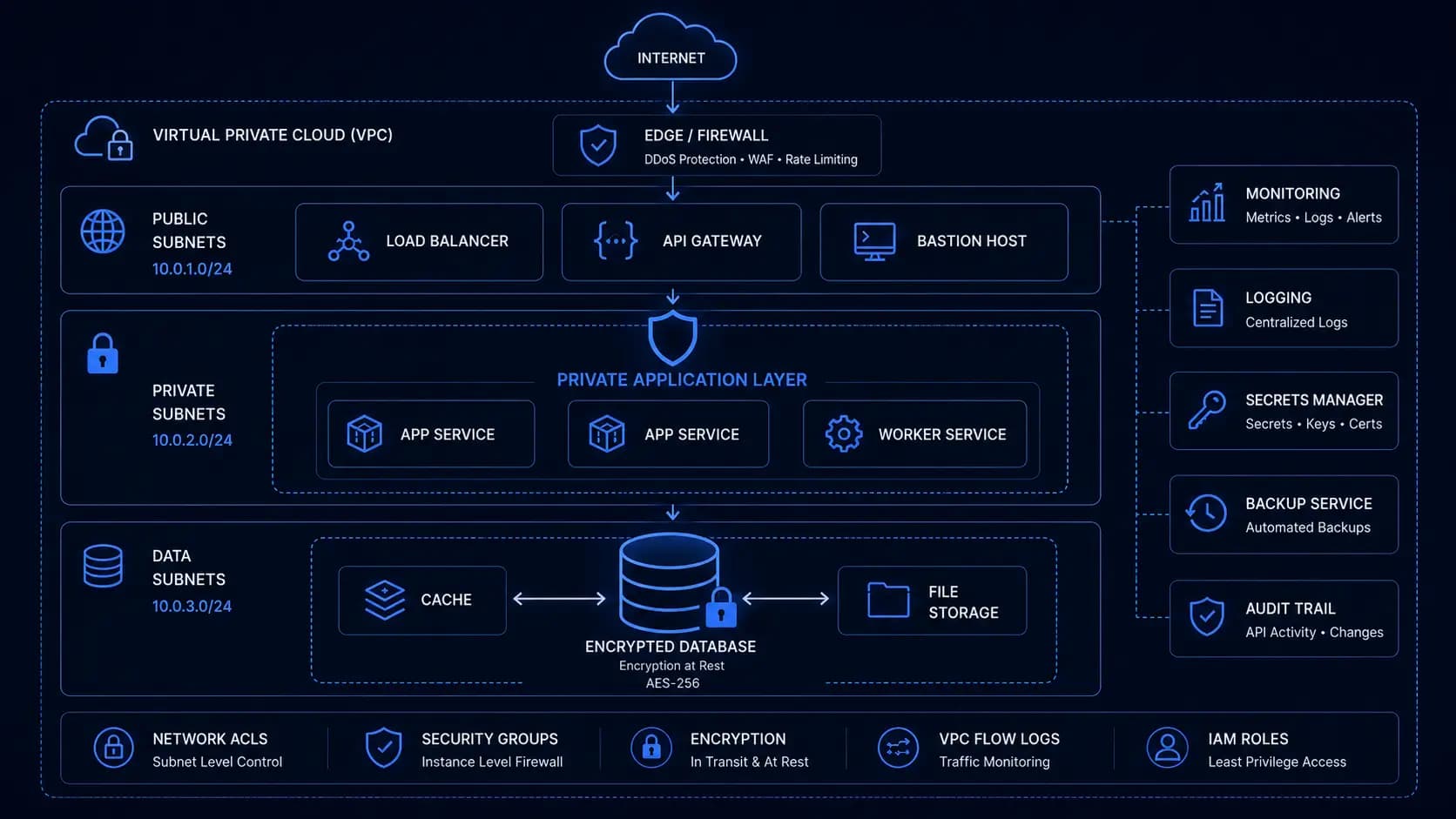
- Infrastructure isolation: Is PHI storage isolated from non-PHI application infrastructure? How are database access credentials managed — environment variables, secrets management, or something else?
- Incident response: Do they have a documented breach notification process? The HIPAA Breach Notification Rule requires notification within 60 days of discovering a breach. Does the team understand their role in that process?
HIPAA-eligible AWS infrastructure is a meaningful signal. AWS has pre-configured HIPAA-eligible services, a well-documented BAA, and established audit tooling. A team deploying healthcare software on infrastructure that does not support HIPAA BAAs — or on self-managed servers without equivalent security controls — is creating a compliance liability that will need to be resolved before you can accept enterprise clients or raise institutional funding.

7. What are their engagement model options, and which is right for your project?
The right engagement model depends on where your project is in its lifecycle. Healthcare founders frequently select the wrong model because they optimize for the lowest upfront cost rather than the total cost of the right outcome.
Fixed-scope project: Appropriate when requirements are genuinely well-defined and EMR integration scope is understood. Works well for greenfield mobile app development with a known feature set, or for adding a specific capability to an existing system. Breaks down when compliance requirements are not fully understood before the contract is signed.
Dedicated team: The right model for complex healthcare platforms where requirements will evolve, for projects with significant EMR integration where scope will be discovered during implementation, and for clinical software that will require ongoing regulatory compliance maintenance post-launch. Monthly engagement gives both parties the flexibility to respond to the realities of healthcare software development without contract renegotiation on every change.
Staff augmentation: Appropriate for adding healthcare-specific technical expertise to an existing engineering team. Best for teams that have the management capacity to direct the work but need specific skills — HIPAA architecture, HCHB integration, FHIR implementation — that their current team lacks.
Questions to ask during the evaluation process
Beyond the seven criteria above, these specific questions consistently reveal the gap between teams with genuine healthcare experience and those who are learning on your project:
- "Walk me through your audit log schema for a system handling PHI. What fields do you capture and why?"
- "What is your approach to PHI in application logs? How do you prevent PHI from appearing in error tracking tools?"
- "Describe a situation where an EMR API behaved differently from the documentation. How did you handle it?"
- "What is the HIPAA Minimum Necessary Standard, and how do you enforce it in an API that serves multiple user roles?"
- "How long did your most recent HCHB sandbox provisioning process take, and what was required to complete it?"
- "What happens to PHI when a user account is deleted? Walk me through your data retention and deletion policy implementation."
- "If a production breach occurred in a system you built, what would you do in the first 24 hours?"
A team that has shipped production healthcare software can answer all of these questions immediately. A team that claims healthcare expertise but cannot answer them specifically is telling you something important about the gap between their marketing and their actual experience.
What to look for in a healthcare software development proposal
A proposal from a qualified healthcare development team will include several elements that proposals from less experienced teams typically omit:
- An explicit BAA signed or offered before any PHI is discussed
- A compliance architecture section that describes how HIPAA safeguards will be implemented — not just a statement that the software will be HIPAA-compliant
- A clear description of which third-party services will handle PHI and whether BAAs with those services are in place
- An EMR integration section that reflects realistic awareness of provisioning timelines and API behavior
- A timeline that accounts for compliance review, security testing, and BAA negotiation — not just development sprints
If a proposal is primarily a feature list with a price, it was written by a team that builds software. If it is a document that integrates compliance requirements into the architecture and timeline, it was written by a team that builds healthcare software. These are different products, and they require different development partners.
Nexios has spent eight years building HIPAA-compliant platforms for US healthcare founders. Our most significant project — CareCoordinations, a care coordination platform for a US home health agency — required bidirectional HCHB integration, native iOS and Android apps for field clinicians, IDG meeting support, and HIPAA-compliant architecture throughout. If you are evaluating development partners for a healthcare software project, book a discovery call and ask us the questions in this guide. We will answer every one of them in technical detail.
Written by

Founder & CEO
Gaurang Ghinaiya is the Founder & CEO of Nexios Technologies. He is passionate about building innovative software solutions that drive business growth. With years of experience in technology leadership, he guides teams toward excellence.