How We Cut Product Image Costs by 80% for an E-commerce Seller Processing 1,500 Images Per Week
A UK-based e-commerce seller was spending three days and significant labour cost between photo shoot and live listing for every watch in their inventory. We built an automated image pipeline that reduced per-image cost by 80% and eliminated the backlog. Here is the architecture and what it actually cost to build
Product photography is one of those costs in e-commerce that everyone knows is too high but nobody wants to be the first to touch. The workflow is manual, the quality expectations are high, and "we have always done it this way" is a sentence that ends a lot of conversations about automation.
For a UK-based e-commerce seller selling luxury watches and other high-value items on Amazon and eBay, the photography workflow had become a genuine constraint on the business. New stock was sitting in inventory without generating revenue for three days while images went through the manual production process. At the volumes they were operating, that lag represented real money.
Here is what we built, what it cost, and what changed.
The original workflow and where it broke down
Before the pipeline, the process looked like this: items were photographed against a standard backdrop, images were imported and reviewed manually, sent to a retouching service, reviewed again, uploaded to the relevant platform, and checked for compliance with that platform's image requirements. For a single item with multiple angles, this was a multi-step process involving several people over multiple days.
The specific failure modes:
- The three-day backlog: Between photo shoot and live listing, each item sat idle. For high-demand pieces, this meant missing sales windows.
- Inconsistency: Manual retouching produced inconsistent results across batches. Background tone, reflection handling, and shadow treatment varied depending on who did the work and when.
- Platform compliance failures: Amazon and eBay have specific image requirements (pure white background, minimum resolution, no watermarks, and specific aspect ratios). Manual review caught most violations but not all, and compliance failures triggered suppressed listings.
- Scaling cost: The cost per image did not decrease as volume increased. Every additional item was another unit of manual labour at roughly the same cost.
What we built
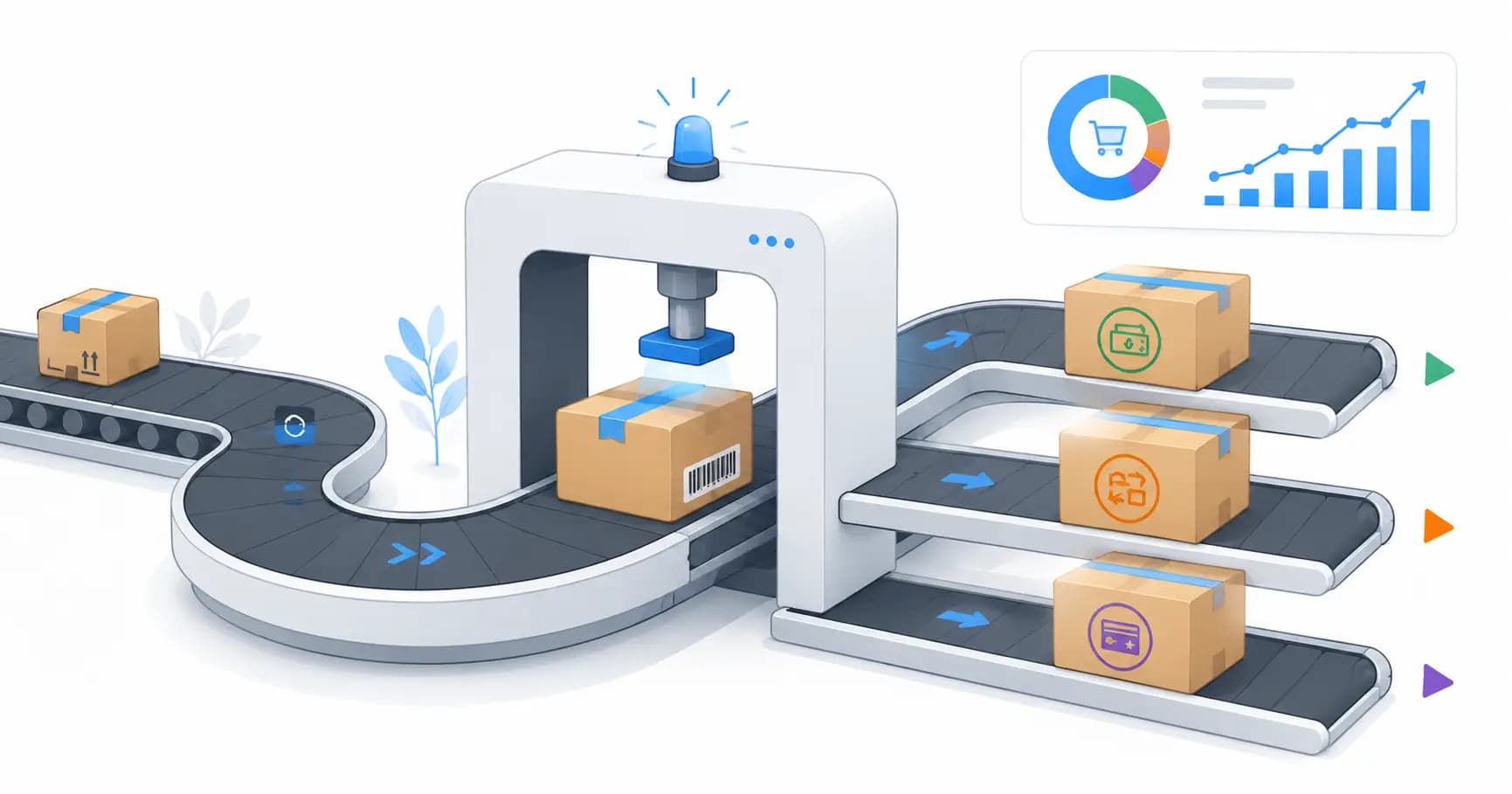
The pipeline is built on Python for the image processing layer with a Laravel-based React dashboard for operators. It runs on AWS with S3 for storage and Lambda for processing jobs. Here is what happens from upload to live listing:

Intake and preprocessing
Images are uploaded in bulk via the dashboard or dropped into a monitored S3 bucket. The pipeline validates each image against a set of rules on arrival: minimum resolution, acceptable file format, and no obvious exposure problems. Images that fail validation are flagged for manual review rather than silently rejected.
Background removal
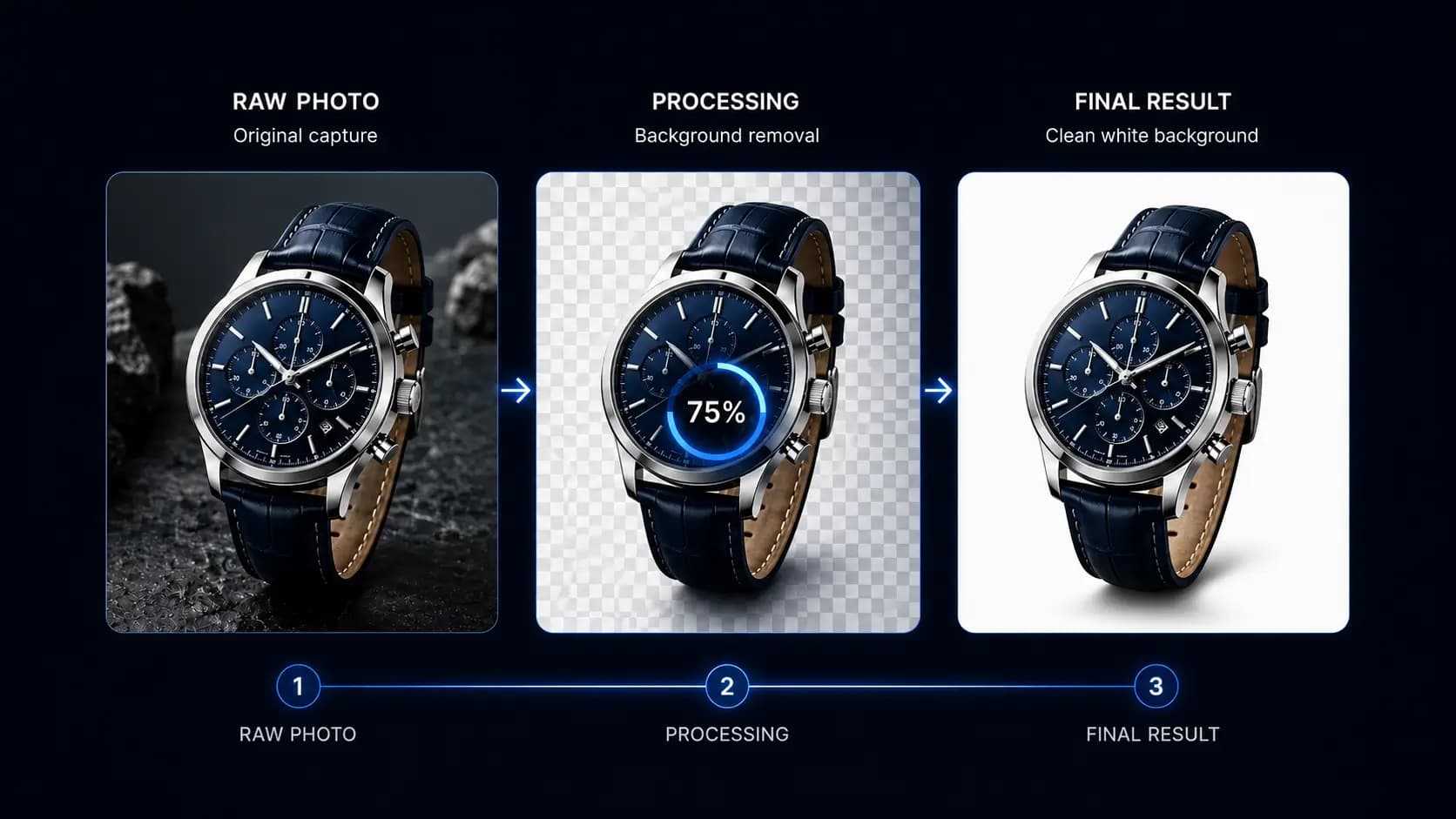
Background removal is handled by a combination of a trained segmentation model and post-processing rules tuned specifically for jewellery and watch photography. Watch photography is genuinely hard for generic background removal models because reflective surfaces, transparent crystal, and metal bracelet links create edge cases that defeat most off-the-shelf solutions. The model was fine-tuned on a dataset of watch images, and the post-processing layer handles the edge cases the model does not get right consistently.

Background replacement and standardization
Removed backgrounds are replaced with pure white (#FFFFFF) for Amazon and eBay compliance. Shadow generation adds a consistent soft shadow beneath the item, which is the treatment Amazon's high-volume category sellers typically use. The standardization step ensures every image in a batch has identical treatment: same background tone, same shadow, same aspect ratio, same resolution.
Platform compliance checking
Before any image is marked as ready, it is checked against the platform's current requirements. This check runs against a rules file that is updated whenever platform requirements change. The compliance check catches aspect ratio violations, resolution failures, and colour profile mismatches before they reach the listing stage. This step alone eliminated the compliance failure rate that had been causing suppressed listings.
Operator dashboard
The React dashboard gives the operations team visibility into every batch in the pipeline: queued, processing, ready for review, approved, and published. Flagged images appear in a review queue with the specific issue annotated. An operator can approve, reject, or send individual images for manual retouching without touching the rest of the batch.
The numbers
After four months of production operation, the metrics looked like this:
- Per-image cost: 80% reduction: The dominant cost in the original workflow was manual retouching labour. The pipeline handles roughly 90% of images without human intervention. The remaining 10% that require manual review cost the same as before; the 90% that do not cost almost nothing.
- Volume: 1,500+ images per week processed through the pipeline at steady state. This would have required a significant increase in headcount under the manual workflow.
- Backlog eliminated: The three-day lag between photo shoot and live listing is now measured in hours for standard images. High-priority items flagged in the dashboard can be in the listing queue within the same day they are photographed.
- Compliance failure rate: reduced to near zero: Suppressed listings from image compliance failures had been a persistent issue. After implementing the compliance check, they became rare enough to be considered exceptional rather than routine.

What made this harder than it looks
Watch and jewellery photography is not the same as generic product photography automation. The properties that make these items visually valuable, reflective metal, transparent crystals, and intricate detailing, are exactly the properties that cause background removal models to fail. We spent roughly 30% of the build time on the segmentation model and post-processing layer for this specific product category. A team that tried to apply a generic solution off the shelf would have found it produced acceptable results for simple items and poor results for exactly the items that matter most to the business.
The other non-obvious challenge was the rules file for platform compliance. Amazon's image requirements are documented but not exhaustively, and they change without announcement. Building the compliance check as a rules file that can be updated independently of the pipeline code, rather than hardcoding the requirements, was an architectural decision that has paid off every time the requirements have changed since launch.
When this kind of automation makes sense
Image pipeline automation makes financial sense when volume is high, the workflow is consistent enough to be modelled, and the cost of manual processing has become a scaling constraint. For this client, all three conditions were met.
If you are processing fewer than a few hundred images per week, the build cost may not pay back quickly. If your image requirements are highly variable, the standardisation benefit is reduced. But if you are running an e-commerce operation at scale with a repeatable photography workflow and a manual processing step that has not changed in years, the economics of automation are almost always favourable.
The 80% cost reduction is the headline. The less visible benefit is that the operations team is no longer the bottleneck. Stock can move from photography to listing without waiting for a retouching queue to clear.
Written by

Founder & CEO
Gaurang Ghinaiya is the Founder & CEO of Nexios Technologies. He is passionate about building innovative software solutions that drive business growth. With years of experience in technology leadership, he guides teams toward excellence.