Shopify Plus vs Custom Commerce: When You've Actually Outgrown the Platform
Shopify is an exceptional platform until it isn't. Here's how to diagnose when your e-commerce business has genuinely outgrown it and what building a custom commerce solution actually costs and delivers.
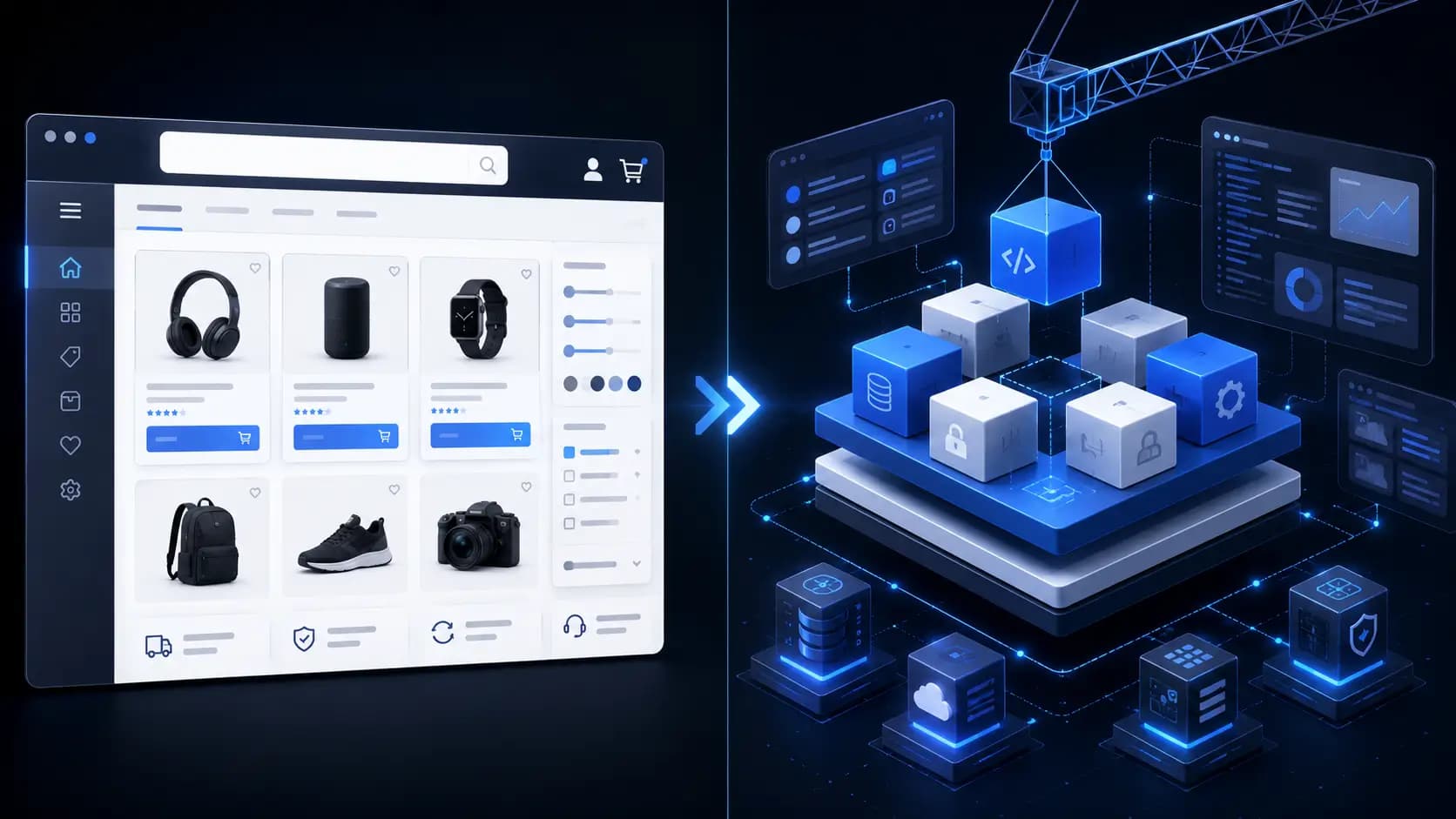
Shopify is genuinely excellent. It handles payments, inventory, shipping, and the long tail of operational concerns that would take years to build from scratch. The question is not whether Shopify is good; it is whether Shopify is the right infrastructure for what your business is trying to become. We have helped brands migrate from Shopify to custom platforms and, just as often, talked clients out of migrations that would have cost them far more than they solved. The distinction is worth understanding before you commit twelve months of engineering budget.
The signs that Shopify is becoming a constraint
The clearest signal is when your team spends more time working around the platform than building on it. Patterns we see repeatedly:
- Data model limitations: Shopify's product and variant model is designed for physical goods with fixed attributes. If you sell configurable products, subscription bundles with complex rules, or digital goods with license management, the Shopify data model cannot represent what you are selling without hacks that accumulate as technical debt.
- API rate limits at scale: Shopify's Admin API has rate limits measured in leaky bucket tokens. At high order volume, 30,000+ daily orders, these limits become a hard ceiling on what your integrations can do in real time. We have seen operations teams actively constrained by this.
- Checkout customisation ceiling: Even with Shopify Plus and Checkout Extensibility, there are conversion-critical checkout flows that Shopify simply cannot render. If the experience your CRO team wants does not fit Shopify's model, you are stuck.
- Cost at scale: Shopify Plus starts at $2,300 per month. Transaction fees on non-Shopify Payments add up to 0.6% per transaction. At meaningful revenue, a custom platform that eliminates both starts to look very attractive on a spreadsheet.

What custom commerce actually delivers, and what it does not
A custom platform gives you a data model that reflects how your business actually works, checkout flows designed around your own conversion data, integrations unconstrained by rate limits or third-party middleware, and the ability to ship capability at the pace your business requires. What it does not give you: a payment processor (you still integrate Stripe or Adyen), fraud detection, tax calculation, or Shopify's app ecosystem. You build what matters and buy what does not.
The financial break-even is usually the honest starting point. If Shopify Plus plus apps plus fees costs you $10,000 to $18,000 per month, and a custom Laravel or Next.js platform costs $120,000 to $200,000 to build and $2,000 per month to run, the payback period is 12 to 24 months. For a business with a 5-year horizon, that math often works. For a business still finding product-market fit, it almost never does.

The three migration failure modes we see repeatedly
First: rebuilding Shopify's existing functionality before building the custom capability that justified the migration. Teams spend 12 months recreating what Shopify already did well and exhaust budget before reaching the part that matters. Second: big-bang replatform, everything goes live on a fixed date with insufficient testing. Third: underestimating data migration. Three million product records and eight million order records are not a weekend project.
What works is a parallel run: the custom platform goes live for a subset of traffic while Shopify handles the rest, data syncs between both systems, and traffic shifts gradually as confidence grows. It takes longer upfront but eliminates the catastrophic downside of a failed launch during peak trading.

The honest answer to "should we migrate?"
Migrate if you have a specific capability Shopify cannot deliver, your revenue scale makes the economics work, and you have engineering capacity to maintain a custom platform for years, not months. Stay on Shopify if your primary motivation is vague; "we have outgrown it" without a specific articulation of what you cannot build is usually a sign the constraint is the product strategy, not the platform.
Written by

Founder & CEO
Gaurang Ghinaiya is the Founder & CEO of Nexios Technologies. He is passionate about building innovative software solutions that drive business growth. With years of experience in technology leadership, he guides teams toward excellence.