Watch Dealer Inventory Software: Consignment, Sourcing, and Stock Truth
A watch dealer's inventory is part stock, part consignment, part pipeline. The data model and workflows that keep stock truth across locations and marketplaces.
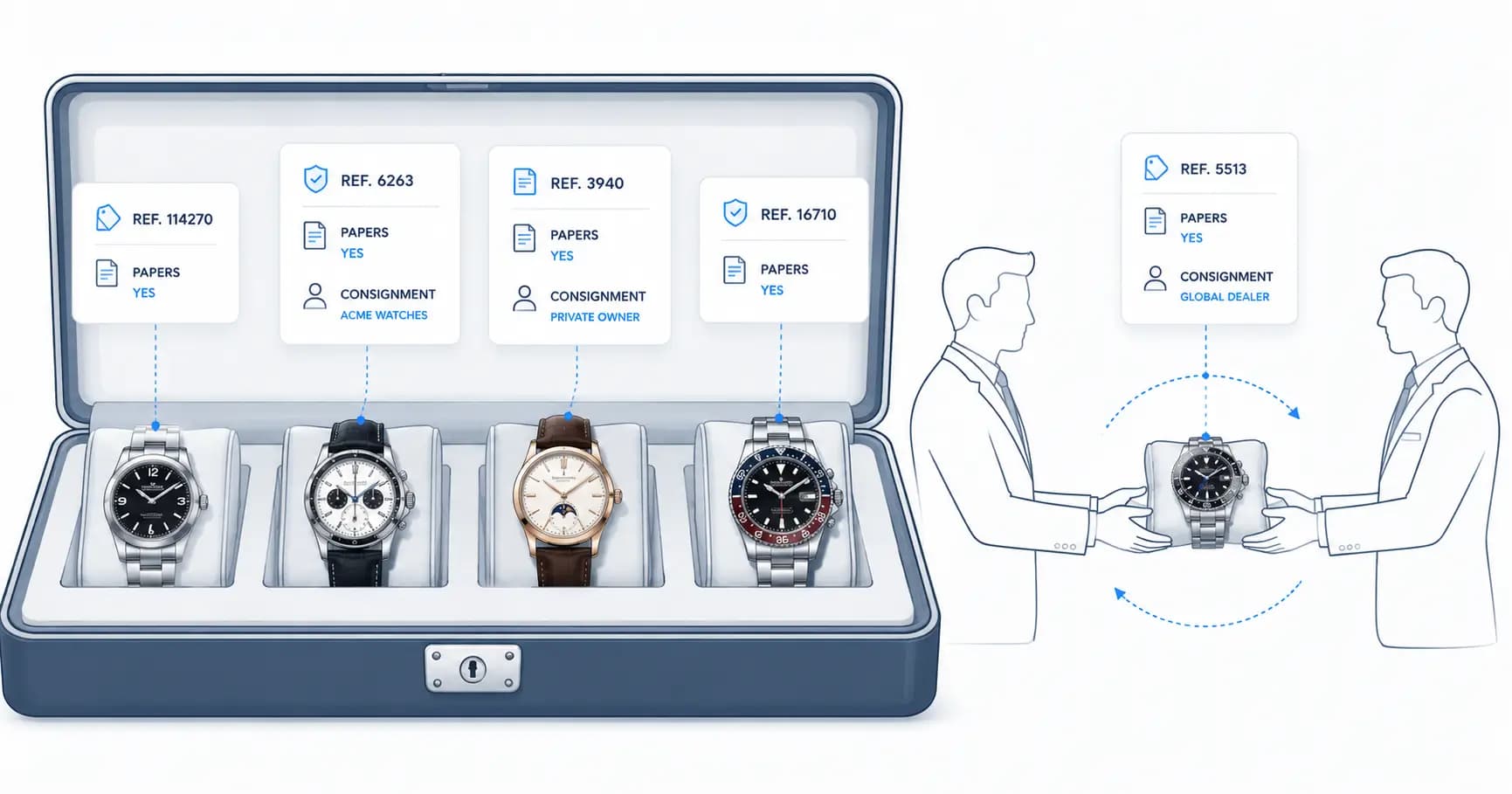
A watch dealer's "inventory" is three different things wearing one word: stock they own, consignment pieces they sell but do not own, and a sourcing pipeline of pieces they are trying to acquire. Generic inventory software models none of them correctly, which is why serious dealers run their business in spreadsheets bolted to a CRM that also does not fit. This post covers the data model and workflows of inventory software built for the trade.
The piece is the atom, and it is not a SKU
Standard inventory assumes SKUs with quantity. A dealer's stock is unique units: this Ref. 5711, this serial, this condition, these papers. The piece record that holds up in practice:
- Identity: reference, serial (with visibility controls), brand, model, production year
- Condition and completeness: graded condition, box/papers/links, service history, polish status (collectors care, and "unpolished" is a price factor)
- Provenance: acquisition source and date, prior ownership chain where known, authentication record
- Economics: acquisition cost, refurbishment costs, current ask, floor price, and market comparables
- State: where it is (safe, boutique, at service, on memo to another dealer, shipped for authentication) and what claims exist on it (reserved, deposit taken, consignment terms)
Location and claim state are where money gets lost: a piece "on memo" to another dealer for two weeks is invisible in a spreadsheet, and a deposit-reserved piece sold to a walk-in is a canceled deal plus an angry client.
Consignment is a ledger, not a flag
Consignment pieces need their own accounting reality: the consignor's identity and terms (net price or percentage, term length, insurance responsibility), the dealer's exposure while holding the piece, and settlement mechanics on sale. The questions the system must answer instantly: what is our total consignment exposure right now, which terms expire this month, and what do we owe whom after this weekend's sales. Dealers who track this in notes fields reconcile it quarterly with pain. Consignment intake and settlement should be workflows with documents (signed terms, condition report with photos at intake) attached to the piece, because the intake condition report is what settles the "it was scratched when I got it back" dispute.
The sourcing pipeline is inventory that does not exist yet
Half a dealer's edge is sourcing: knowing a client wants a specific reference and finding it. That makes the want-list a first-class object: client demand (reference, condition tolerance, budget, urgency) matched against incoming pieces automatically. When a 5711 arrives at intake, the system should produce the ranked call list, the mechanic we described from the client side in why generic CRMs fail luxury watch retailers. Supply-side sourcing (dealer networks, auctions, walk-in offers) is a pipeline with stages and offer history per piece, so "we passed on this serial at 40k in March" is knowledge, not memory.
Multi-channel sync without double-selling
Pieces list simultaneously on the dealer's site, Chrono24, and sometimes physical consignment at partner boutiques. Unique units make oversell a brand incident, not an inconvenience, so channel sync needs a single authority with holds: enquiry-triggered soft holds, deposit-triggered hard holds, and immediate delisting fan-out on sale. The same single-authority pattern applies to marketplace-heavy operations generally, as in our Amazon seller engineering post, but with the stakes of one-of-one stock. On the storefront side, the reservation and enquiry mechanics belong to the luxury e-commerce patterns covered separately.
Valuation needs market data discipline
Ask prices move with the market. Production systems track comparables (marketplace listings, auction results) per reference and condition band, timestamped, so pricing decisions are versioned: what did we believe this was worth when we bought it, and what moved. This does not need to be algorithmic pricing; it needs to be organized evidence attached to the piece, reviewable when a piece ages past its expected turn time. Aging reports by reference and acquisition cost, not gut feel, drive the "move it or hold it" conversation.
Where this meets the CRM
Inventory and clienteling are one system in this trade: the piece's interest list, the client's collection history, and the transaction lifecycle (including part-exchange, where inventory acquisition and sale happen in one deal) all cross the boundary. That is why we build them on a shared data model, the approach behind our watch CRM case study and the luxury CRM practice generally. If your operation is running on spreadsheets that only one person understands, the fix is a system that models the trade as it actually works: pieces, claims, consignment, and the clients attached to all of it.
Written by

Founder & CEO
Gaurang Ghinaiya is the Founder & CEO of Nexios Technologies. He is passionate about building innovative software solutions that drive business growth. With years of experience in technology leadership, he guides teams toward excellence.